Cookbook Cover Inspiration from Our Community
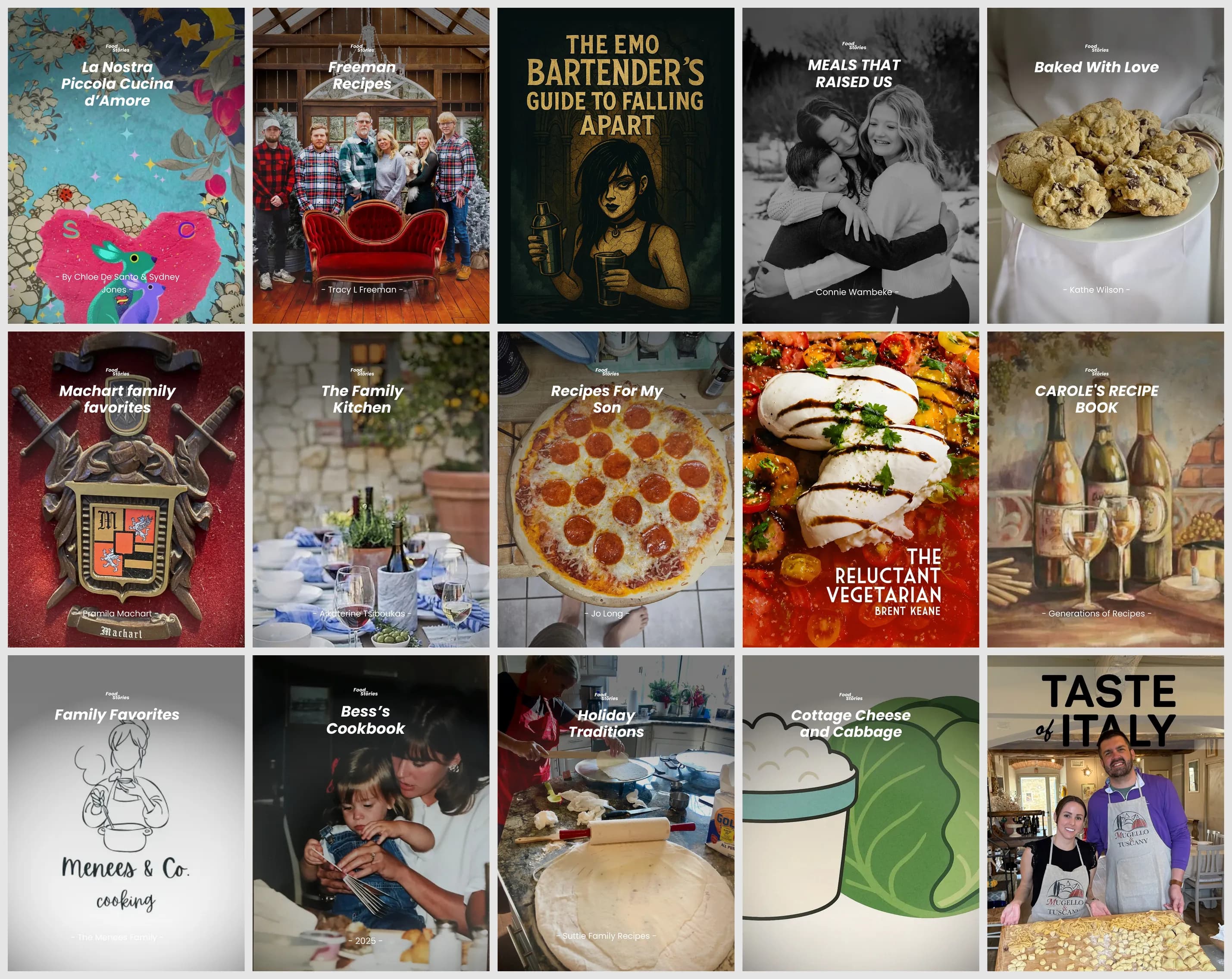
The cover is the part everyone else sees first. Before they read a recipe or know what it's made up of, it tells them what kind of book they are holding and who it was made for.
Looking at the covers home cooks actually chose, a few patterns emerge. Family histories tend to put people at the front. Books made as gifts often feature a favorite food. Personal collections leave more room for humor and personality. Together, they offer a chance to inspire and be inspired.
Most of the time, the cover is decided by one question: Who is this book for?
Every cover below was made by a Vinst user and shared with permission. They are not templates or mock-ups. They are real books, made from real recipe collections.
The family history
This is the largest group by far. These books were made so that a family’s way of cooking would not disappear.
Their covers usually feature a person, often more than one. In many cases, the photograph was taken decades before the cookbook was made.
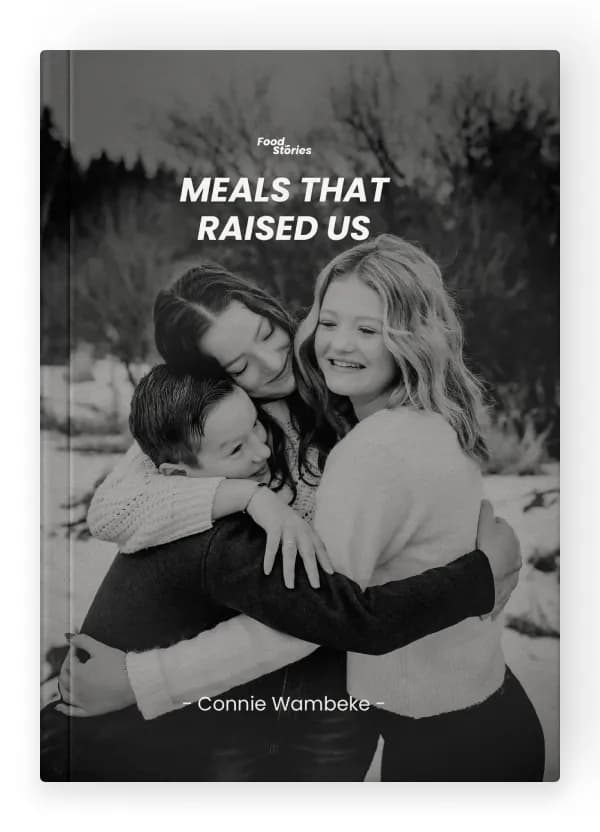
That feels significant. A book containing 89 recipes puts a family on the front instead of a finished dish because the recipes are not really the subject. The people who cooked them are.
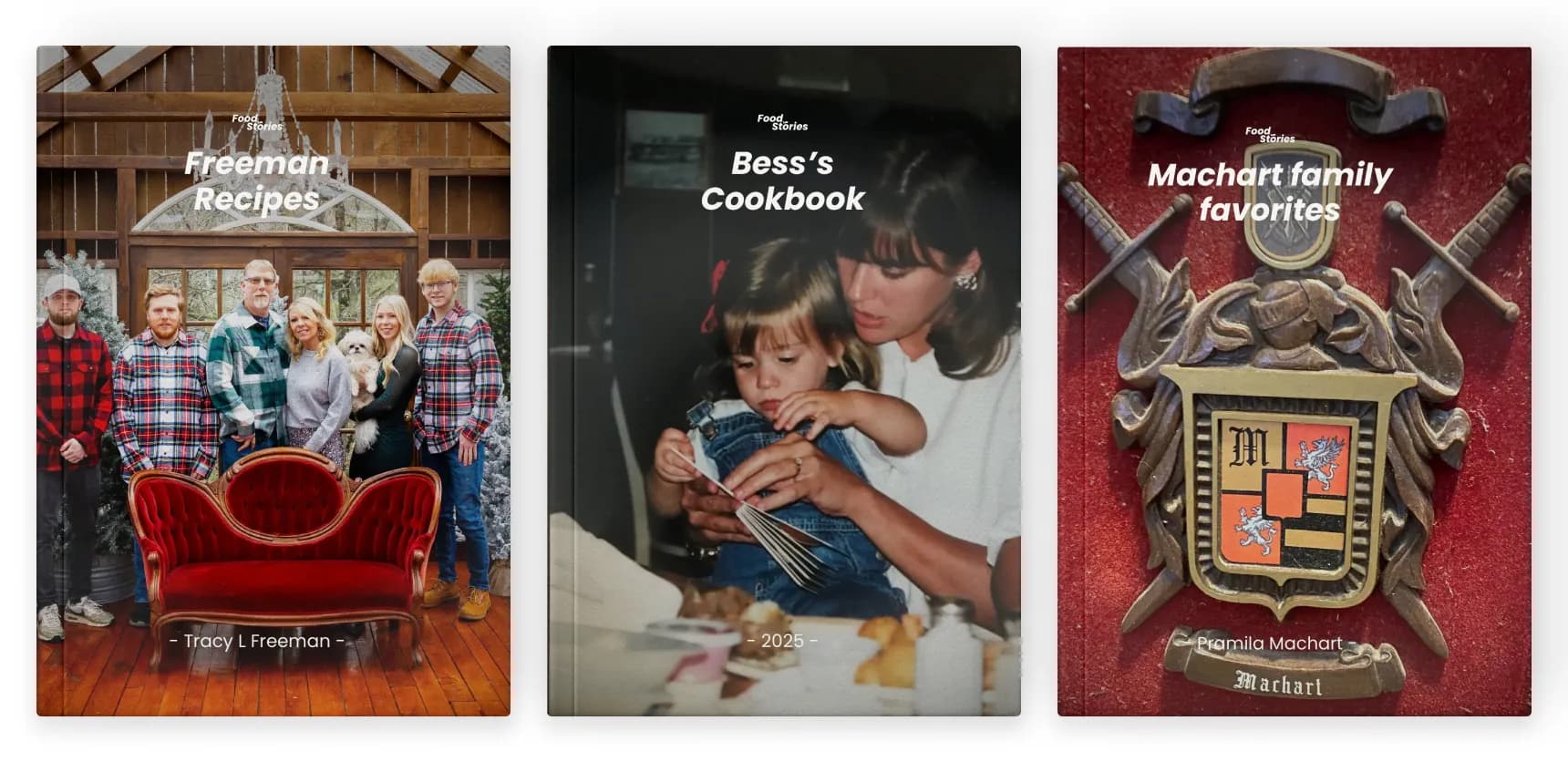
The titles tell the same story: Meals That Raised Us. Gathered by Love, Connected by Recipes. Carole’s Recipe Book, credited to “Generations of Recipes.”
The family name often appears somewhere, along with the idea of gathering, remembering or passing something on.
These also tend to be the largest books. One has 89 recipes. Another has 159. When you are trying to record a family’s cooking, it can be difficult to know where to stop.
If this sounds like your book, start with the oldest good family photograph you have. Consider putting the family name in the title. Do not worry if the image is a little soft. That quality can be part of its charm.
The cookbook made as a gift
A gift cookbook has a different job. Its cover will be read first by someone who did not make it.
These books often lead with food rather than family.
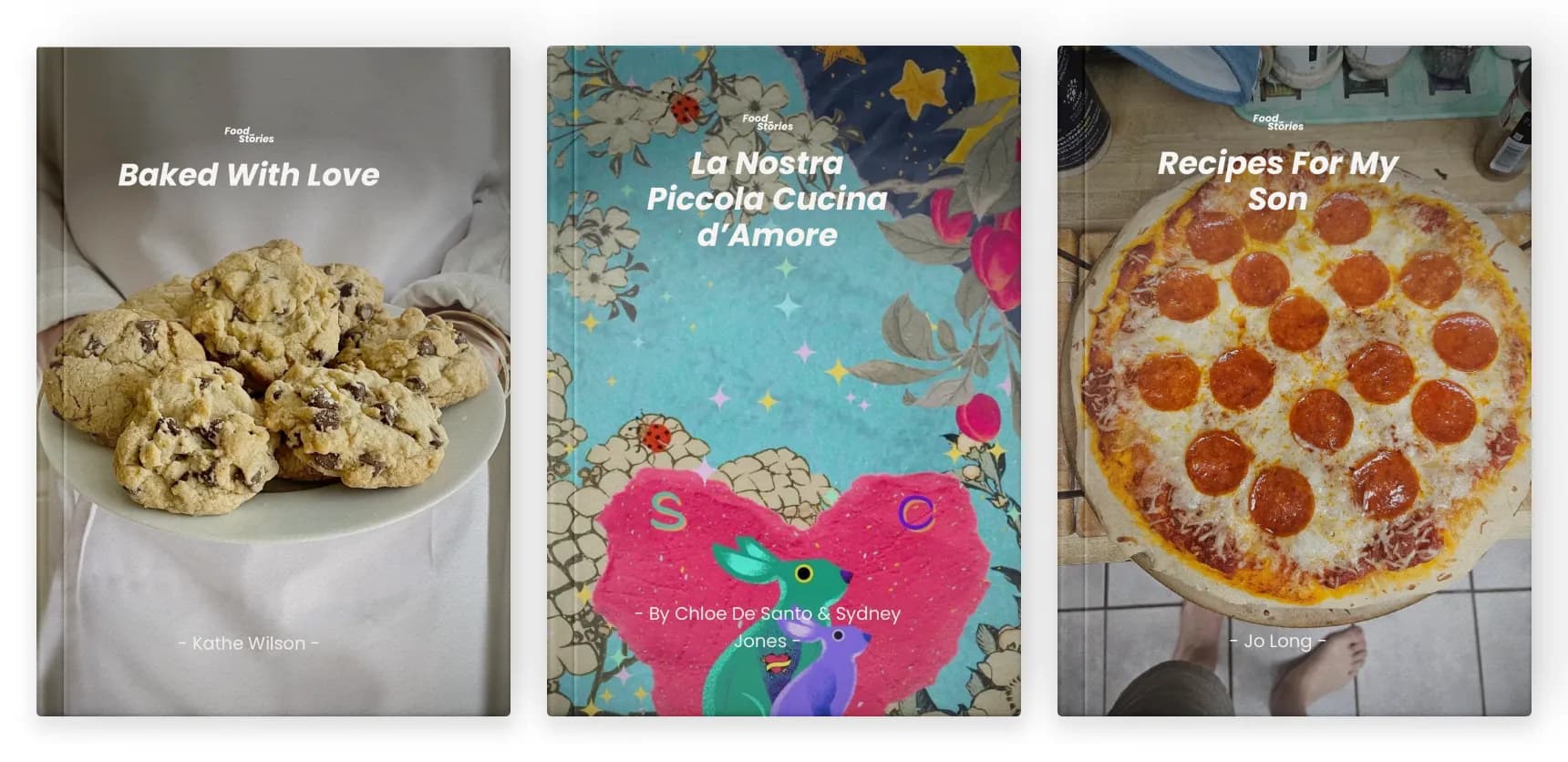
Recipes for My Son is a useful example. The title tells us who the book is for. The cover shows something he likes to eat.
It is not a portrait of the son or a formal family picture. The meaning comes from putting that title next to that pizza.
The child’s artwork on La Nostra Piccola Cucina d’Amore creates something even more personal. Someone saved a painting and turned it into the front of a family book.
If you are making a gift, try putting the recipient in the title and something they love on the cover. Gift books are often smaller, usually around 20 to 40 recipes. They do not need to contain everything. A good gift is allowed to be edited.
The cookbook with its own personality
Some covers barely mention family at all. These look more like books you might come across in a shop.
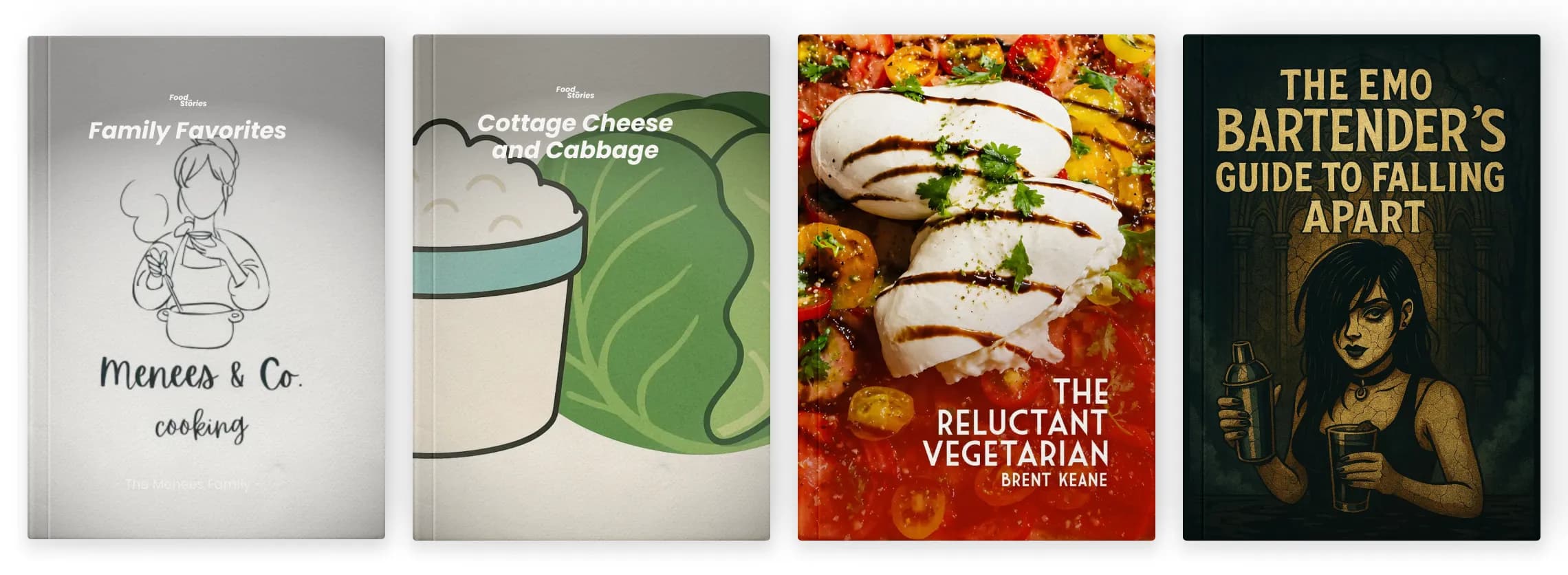
These covers have something the others do not: a joke, a point of view or a little self-mockery.
The Emo Bartender’s Guide to Falling Apart contains only 20 recipes, but the title and illustration give it a whole personality.
For this kind of book, choose a title that would catch your attention on a shelf. Then let one image, illustration or piece of type carry the idea. You do not need a photograph at all.
The place where the food began
Another group uses the cover to show where the food came from. It might be a kitchen, a holiday ritual, a trip or a table waiting for everyone to sit down.
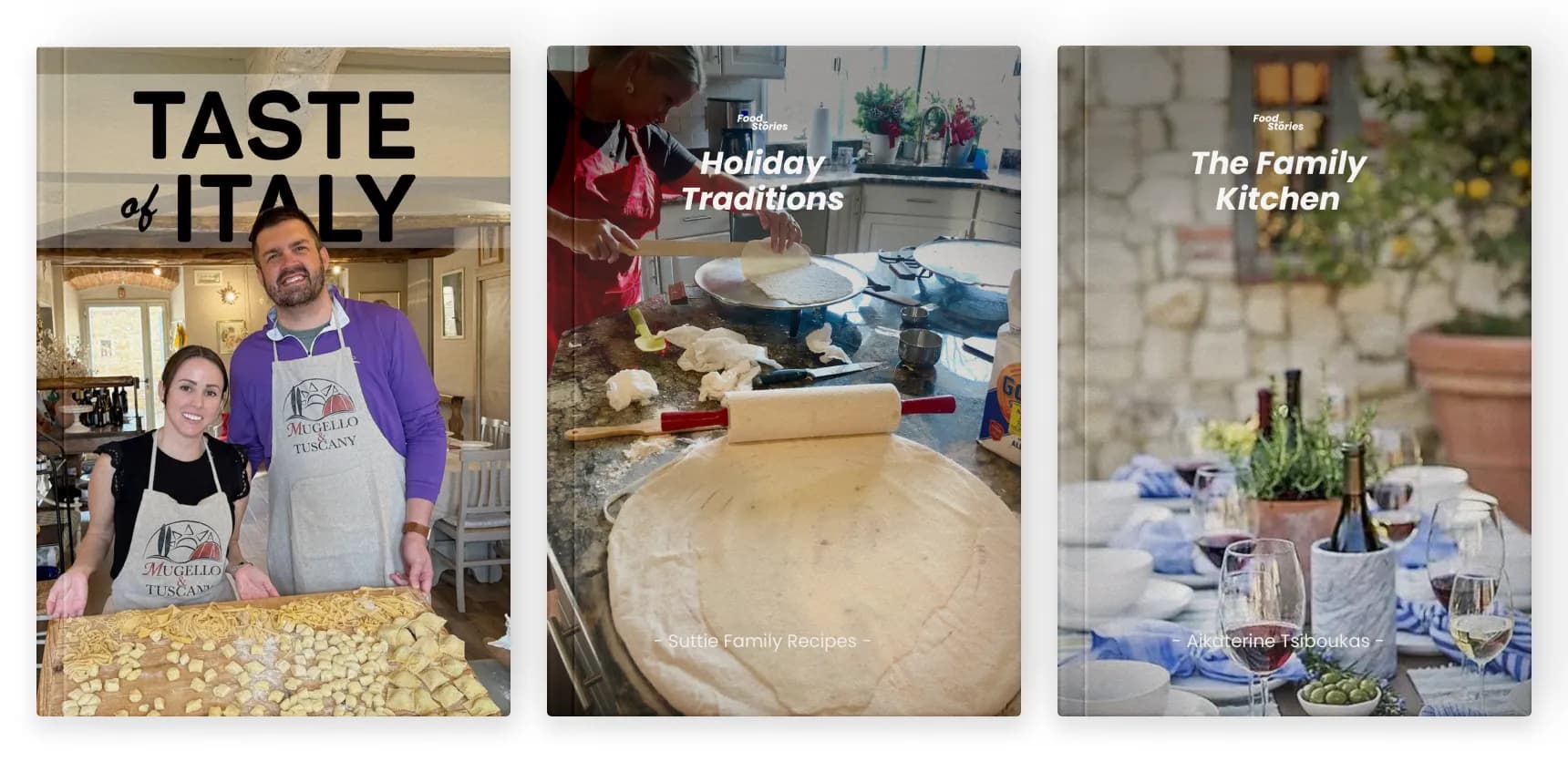
That last cover uses a simple trick. It photographs the table instead of the food or the people. You can imagine the meal and the gathering without seeing either one.
If your recipes belong to a particular place or tradition, look beyond the finished dish. A kitchen counter, a dining table or a familiar holiday ritual may tell the story better.
Five places to start
Across all twenty books, the covers use one of five things:
- The people: a family, a cook or a child at the counter
- The food: usually one favorite dish, photographed close
- The place: a table, kitchen, home or meaningful trip
- An illustration or pattern: anything from lemons to a child’s painting
- The title: sometimes the words are enough
Not one of these cooks used a stock photograph.
That may be the clearest lesson here. The picture does not need to look professionally staged. It needs to belong to the book.
You do not need to design everything from scratch, either. Choose a picture and add a title. Vinst handles the layout, type and spine.
The books shown here range from 20 recipes to 159. There is no number you need to reach before your collection is ready to become a book.
Start by deciding who it is for. The cover will usually follow.
A few practical questions
What kind of photograph works for a family cookbook?
Choose one with people in it, especially if the book is as much about the family as it is about the food.
Old snapshots often make wonderful covers. Feeling matters more than perfect focus. For the best print quality, use the largest version of the photograph you can find. Vinst recommends an image of at least 2700 by 3600 pixels when possible.
Does the cover need to show food?
No. Show food if the dish itself is the point.
Family histories often show the people, the home or a shared table instead. Gift books and personal collections are more likely to feature a particular dish.
Can I use a child’s artwork?
Yes. It can make a very personal cover.
Scan the artwork or photograph it straight on in even, natural light. Crop out the surrounding surface before uploading it.
What if I do not have a suitable photograph?
Try an illustration, a pattern or a strong title with no picture at all. Some of the best covers in this collection do not use photography.
Can I change the cover later?
Yes. You can keep changing the cover while you work on the book. Once a copy has been sent to print, that copy cannot be altered. You can still update the cookbook and order a new version whenever you like.
Make a cookbook of your own
You cook. We create your book.
Vinst turns the recipes you love into a digital collection and a beautifully printed cookbook.